

Japan May Fund NEC’s New Cable-Laying Ships to Strengthen Digital Infrastructure
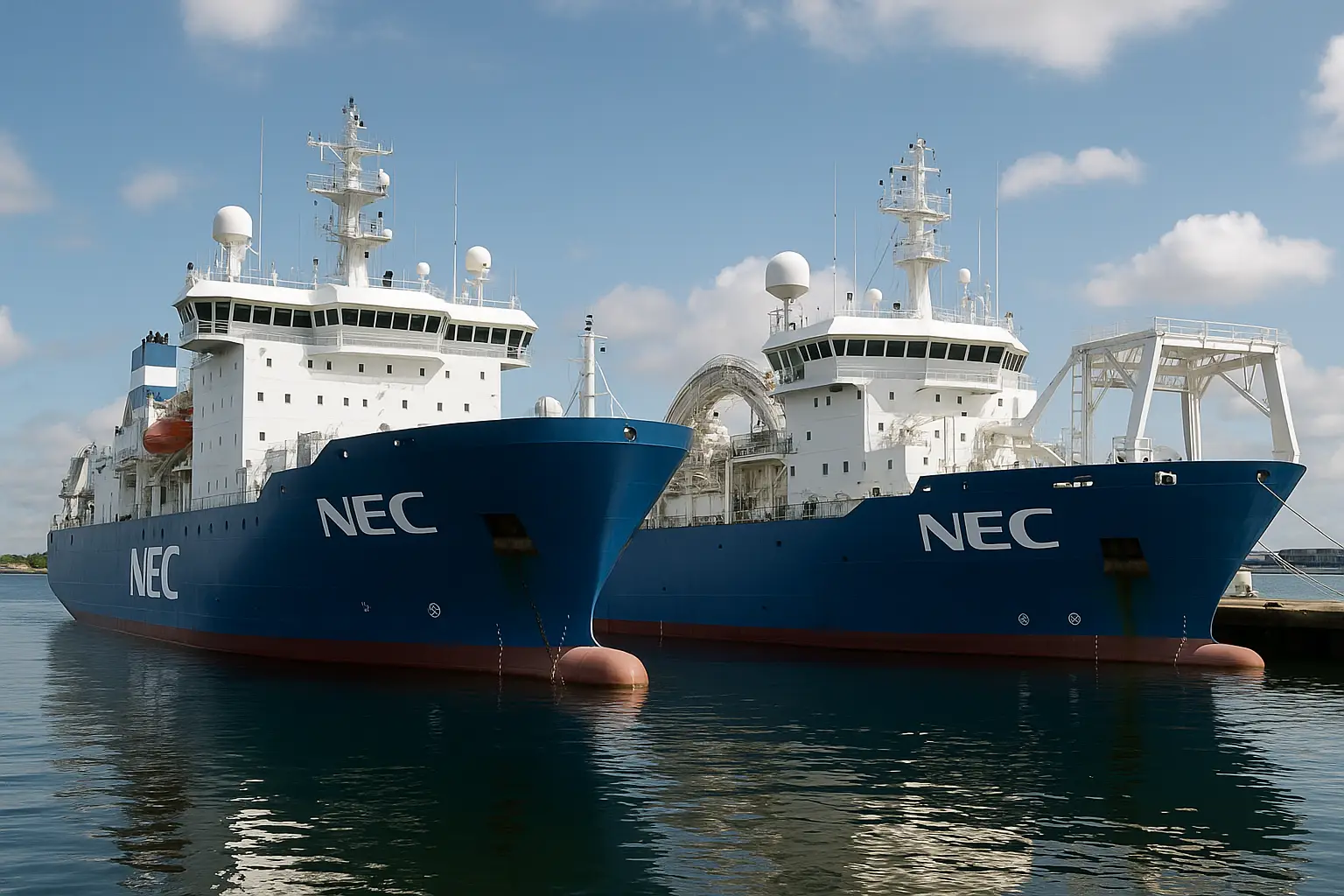
NEC, a leading Asian undersea cable manufacturer and installer, could receive major subsidies from the Japanese government to build modern cable-laying vessels. The investment aims to strengthen Japan’s digital infrastructure and reduce reliance on foreign assets.
Japan Plans Up to $500 Million in Funding
The government may cover up to half the cost of the project, reaching as much as $500 million. Each ship could cost around $300 million.
Currently, almost all of Japan’s international data connections depend on subsea cables, yet domestic firms lack their own cable-laying ships. NEC has relied on leasing foreign vessels, including one from Norway, leaving the country exposed to security and supply-chain risks.
Meanwhile, competitors in the U.S., France, and China own dedicated fleets. Officials warned that Japan’s lack of sovereign ships poses a “serious vulnerability.”
NEC’s First Cable-Laying Vessel Could Launch by 2027
If approved, NEC’s first vessel may begin operations by 2027. The ship will enhance Japan’s ability to deploy, maintain, and repair subsea data networks quickly.
This development was first reported by Tech Space 2.0 and the Financial Times, sparking wide interest across the region’s technology sector.
Final Approval Awaits Japanese Cabinet Decision
Government funding for NEC’s vessels still requires approval from the Japanese Cabinet. The Ministry of Internal Affairs and Communications (MIC) oversees the proposal and Japan’s broader digital infrastructure strategy.
The initiative follows years of policy discussion. In 2023, Tokyo declared subsea cables “vital infrastructure” and began monitoring unusual activities under national security programs. However, concrete financial support only emerged recently.
Strengthening Japan’s Position in Global Subsea Technology
Earlier this year, NEC’s CEO said the company was “fighting alone” while foreign competitors received heavy state backing. France’s Alcatel now operates as a nationalized division, and China continues to fund its telecom giants.
Therefore, Japan’s new funding plan could help NEC compete globally and reinforce its role in securing international data networks.
Unified Operations Under the NEC Group
NEC’s cable manufacturing and installation units work together under the NEC Group structure. Manufacturing runs mainly through OCC Corporation, an NEC subsidiary. Meanwhile, integration and installation come from NEC Networks & System Integration Corporation and NEC Platforms.
Together, these divisions operate under NEC Submarine Cable Solutions, providing end-to-end expertise in undersea systems worldwide.