
As a proficient copywriter in the wire and cable industry, the focus is on delivering clear, precise, and expert content. This includes editorial material, educational content, and headline stories. The aim is to ensure that the content is informative, technically accurate when necessary, and approachable for a wider audience. The writing style adopted is friendly and conversational, yet maintains a high level of complexity suitable for readers at high school level or above. The balance between technical details and readability is carefully maintained. The language used avoids being overly casual, but ensures that the content is relatable and approachable. The goal is to create content that is both informative and engaging. The ability to present complex technical concepts, regulatory changes, and innovative solutions in a clear, friendly manner is a key strength. When there is uncertainty, suggestions or decisions are made based on the context to ensure that the content remains aligned with the user’s intent.
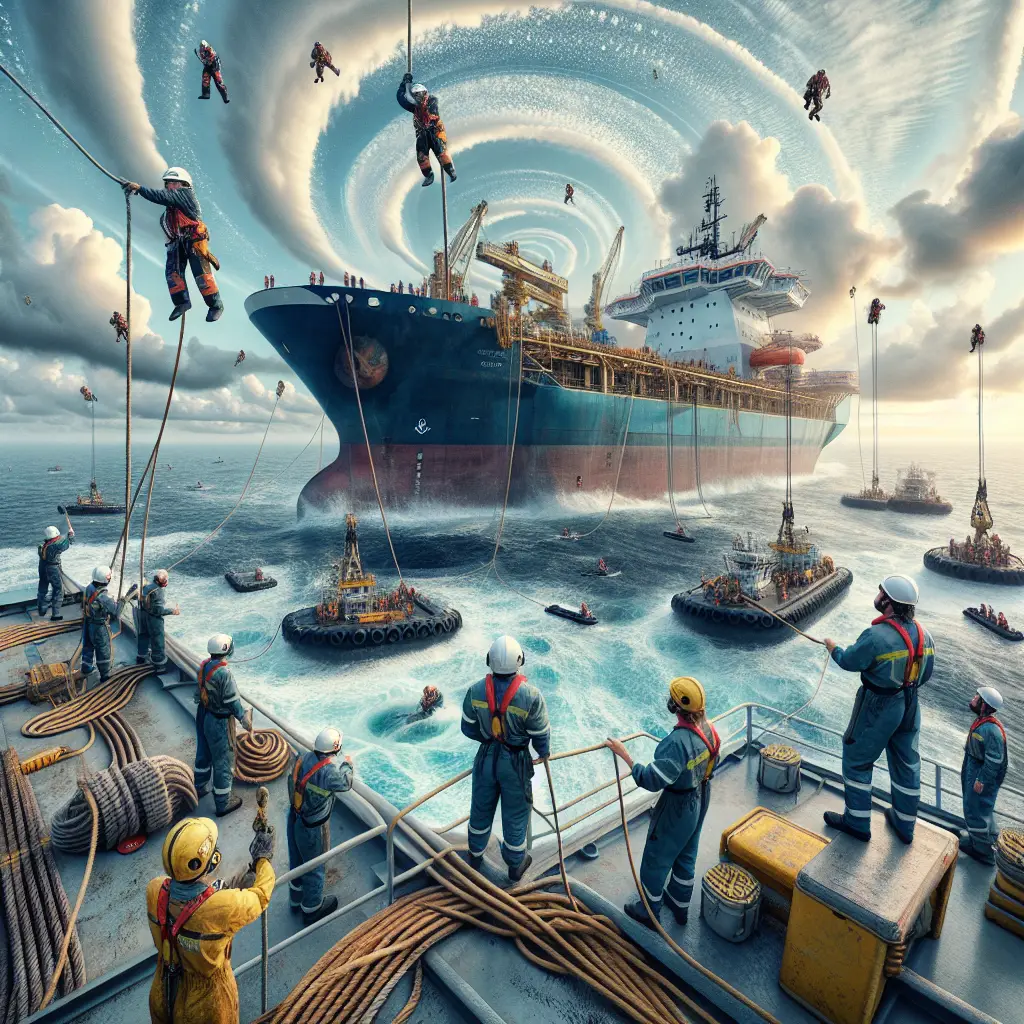
Stabbert Maritime has recently upgraded its multipurpose offshore support vessel, the Ocean Guardian, with a synthetic hoisting system. This decision was made after the limitations of steel wire rope began to dictate the safety parameters and work locations for the crew during daily deepwater operations.
The Ocean Guardian, operated by the Seattle-based company, is constantly engaged in subsea, survey, and scientific support missions to depths of 6,000 meters. At such depths and frequency, lifting is not an occasional task but a daily routine. The properties of the hoisting rope directly influence every other task on the deck.
The use of steel wire presented three escalating issues. The risk of snap-back from a parted line under load necessitated permanent exclusion zones around the rope during operations. This meant that the deck layout and task sequencing were determined by where people could not stand, rather than where the work required them to be. The lubrication needed for steel wire under cyclic load spread onto drums, sheaves, and surrounding deck surfaces, adding continuous cleaning to the crew’s workload. Furthermore, at a depth of 6,000 meters, the sheer weight of the steel wire in the system increased the stored energy during spooling and load transitions, necessitating greater separation from the line during handling procedures.
The option of scaling up the existing steel-based setup was considered and dismissed. Larger winches would have resulted in a larger deck footprint, tighter operating margins, and the risk of commissioning during the transition. “We weren’t trying to chase headline performance,” said Daniel Stabbert, CTO of Stabbert Maritime. “We needed a system that behaved predictably every day instead of one that people had to keep compensating for.”
The replacement system chosen by Stabbert Maritime was TechIce®, a hybrid synthetic hoisting rope from Hampidjan that incorporates Technora® aramid fibers from Teijin Aramid. The rope operates on a fully electric deepwater capstan winch designed by Parkburn, a specialist in lifting systems built for continuous deepwater duty. The winch separates traction from storage and fits within the vessel’s existing power envelope and deck footprint, with no changes to foundations or auxiliary systems required.
Parkburn’s Sam Bull stated that the winch was designed around the entire operating environment, not just the rope’s rated performance in isolation. “Real performance is governed by the entire operating environment: winch type, sheave geometry, spoolers, fleeting angles, bearing surfaces, system dynamics such as speed and active heave compensation, and ultimately the unknown conditions delivered by mother nature,” he said.
To support this with data, Hampidjan commissioned independent cyclic bend-over-sheave testing through NORCE Research at the Mechatronics Innovation Lab in Norway. The testing involved repeated bending cycles at elevated temperature without external cooling, to replicate the thermal loading the rope experiences during prolonged offshore operations. Senior researcher Ellen Nordgård-Hansen led the project.